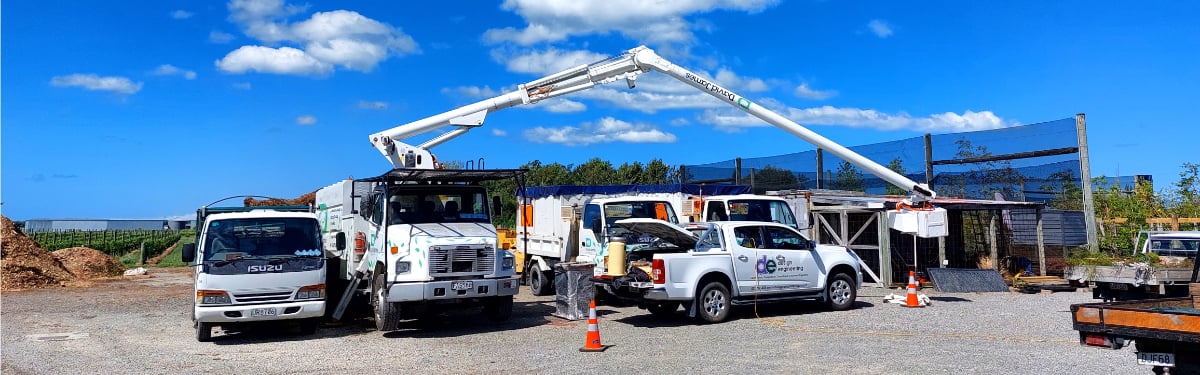
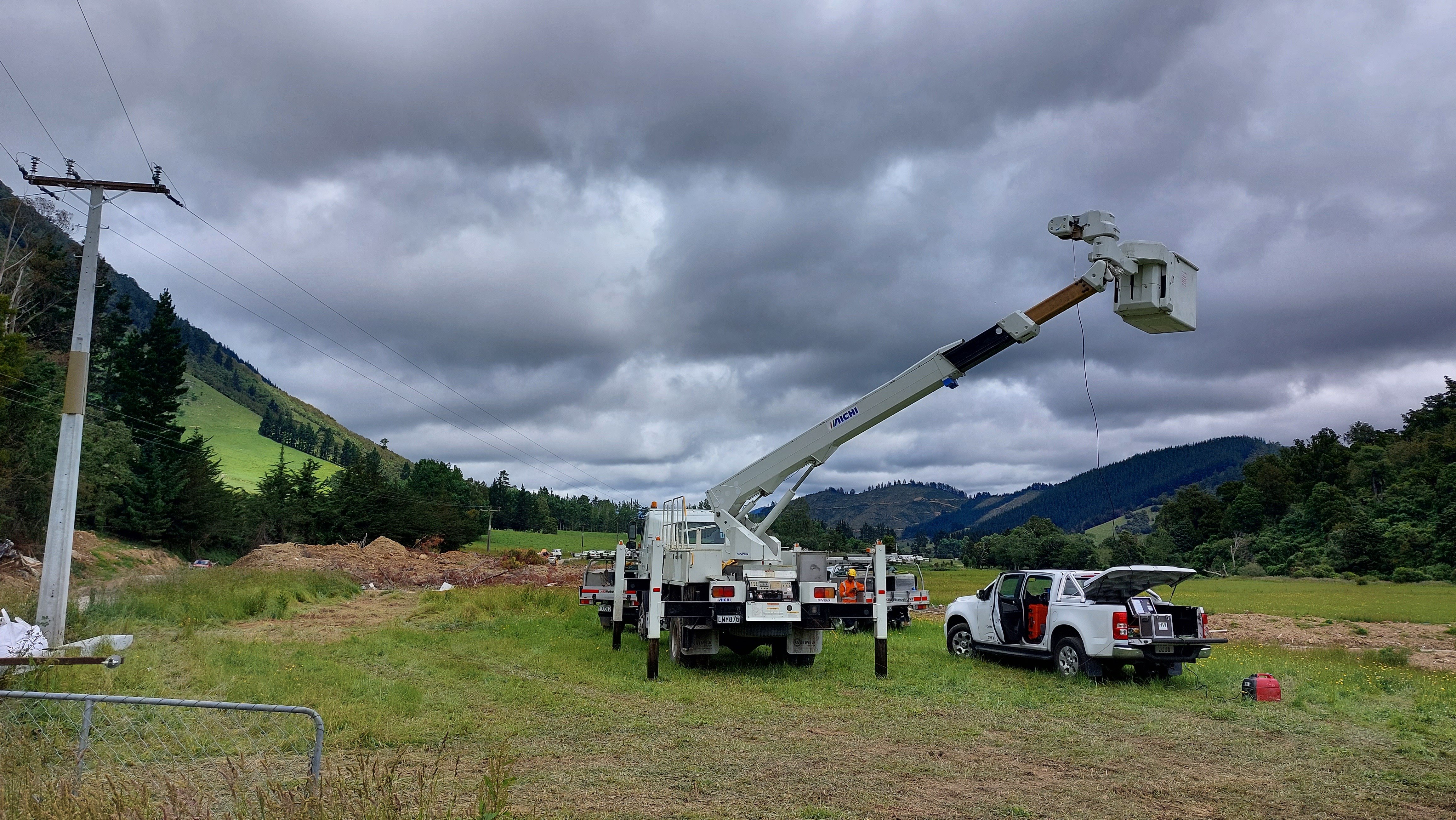
For Aotearoa's electrical utilities, contractors, and infrastructure providers, working near overhead lines is part of everyday operations.
EWPs operating alongside distribution networks. Cranes lifting near live assets. Civil works in proximity to HV infrastructure.
The risk is well understood — and well documented.
Yet incidents still occur. Not because the risks are unknown, but because the systems used to manage them are often incomplete.
Safety Is a System, Not a Single Control
Managing overhead line risk isn't about any one control measure.
It's a layered safety system, where each element supports the next:
- Procedures define the work
- Training builds capability
- Equipment enables safe operation
- Inspection and certification ensure that equipment performs as intended
If any one of those layers is weak, the entire system is exposed.
Where the System Often Fails
Procedures and planning are essential. Under the Health and Safety at Work Act 2015, PCBUs have a duty to manage risk so far as is reasonably practicable — and that starts with establishing how work near overhead lines should be carried out.
Training sharpens decision-making. Operators need to understand electrical risk, not just plant operation — and supervisors need to recognise proximity hazards in changing site conditions.
But both layers share a critical assumption: that the equipment being used will perform as expected.
In practice, this is where risk is most often introduced.
Equipment is assumed to be safe — rather than verified to be safe.
The Failure Modes Are Real
Consider two scenarios that recur across the industry:
An EWP operating near live distribution lines — certified on paper, but with insulation that hasn't been dielectrically tested to AS 4748 within the required inspection cycle. The operator is following the procedure. The exclusion zone is set. But if the insulation fails under voltage, the layered system collapses at its foundation.
A crane lifting near live assets — with a current WoF sticker, but no independent verification that the load-bearing components meet AS 2550 requirements. The lift plan is solid. The operator is experienced. But the certificate is the weakest link.
In both cases, the procedures and training are doing their job. The equipment is the gap.
The Foundation Everything Else Depends On
For equipment operating near live infrastructure, inspection and certification aren't just compliance activities — they're the control that makes every other control reliable.
If equipment hasn't been properly inspected, correctly certified, and maintained to recognised standards:
- Procedures are built on assumptions
- Training is applied to unreliable systems
- Controls may fail at the moment they're needed most
Under the Electricity (Safety) Regulations 2010, network operators and contractors have specific obligations around electrical safety that extend to the equipment their people are using. Independent, accredited inspection is how those obligations are met — and demonstrated.
What Accredited Inspection Actually Means
Not all inspection and testing is equal.
DEG's work is underpinned by two internationally recognised frameworks:
ISO/IEC 17020 – Inspection Bodies
When your network operator, insurer, or regulator asks for evidence of independent verification, accreditation to ISO/IEC 17020 is what that looks like. It means independent, impartial assessment — not a tick-and-flick from a service provider with a commercial interest in the outcome.
ISO/IEC 17025 – Testing and Calibration
For HV PPE, insulated tools, and voltage detection equipment, test results are only as good as the laboratory producing them. ISO/IEC 17025 accreditation means full measurement traceability and results that stand up to audit.
As an IANZ-accredited provider, DEG holds both.
What This Means for Your Operation
For Health and Safety Managers, this translates directly into audit-ready assurance:
- EWPs inspected to AS 4748 and AS 2550.10 — with records that demonstrate compliance at the point of use
- Cranes and lifting gear certified against AS/NZS 4991 and AS 2550
- HV/LV PPE and insulated tools tested and traceable — aligned to network operator safe work practice requirements
- Calibration services that support your broader compliance obligations under NZS 3000 and related standards
Without that level of assurance, risk is being managed on assumption — not evidence. And when WorkSafe or your network operator asks for proof, assumption isn't enough.
Built for New Zealand's Infrastructure Sector
DEG supports electrical utilities, contractors, and infrastructure providers nationwide with inspection, testing, and certification services designed for the realities of working near live infrastructure.
Our mobile teams operate across the country, with deep familiarity with the regulatory frameworks, network operator requirements, and operational pressures that define this sector.
Start With a Compliance Review
Working near overhead lines will always involve risk. The question is whether your equipment assurance is genuinely closing the gap — or leaving it open.
If you're not certain when your EWPs or lifting gear were last independently inspected, or whether your HV PPE testing is current, that's the right place to start.
Talk to DEG about a compliance review →