The Pressure Equipment, Cranes and Passenger Ropeways Regulations 1999 (PECPR Regs) cover a wide range of equipment — but not all pressure equipment is inspected the same way, and not all of it falls under the same compliance requirements. Here is a plain-language guide to what is in scope for pressure vessel, boiler, and pressure piping inspections, and what a compliant inspection report must contain.
What the PECPR Regs Cover
The PECPR Regs apply to pressure equipment above certain hazard thresholds defined in the regulations. Equipment below the threshold — small air compressors, domestic hot water cylinders — is excluded. Equipment at or above the threshold must be inspected by a recognised inspection body at defined intervals.
The main categories are:
Boilers
A boiler generates steam or high-temperature water under pressure. The PECPR Regs distinguish between:
- Boilers without superheat — the most common type in NZ industry, generating steam at or near saturation temperature. These are within the IANZ-accredited scope for DEG Survey & Inspection.
- Superheated steam boilers — more complex, found in power generation and large industrial plants.
- Hot water boilers — pressurised hot water systems, common in food processing, dairy, and industrial heating.
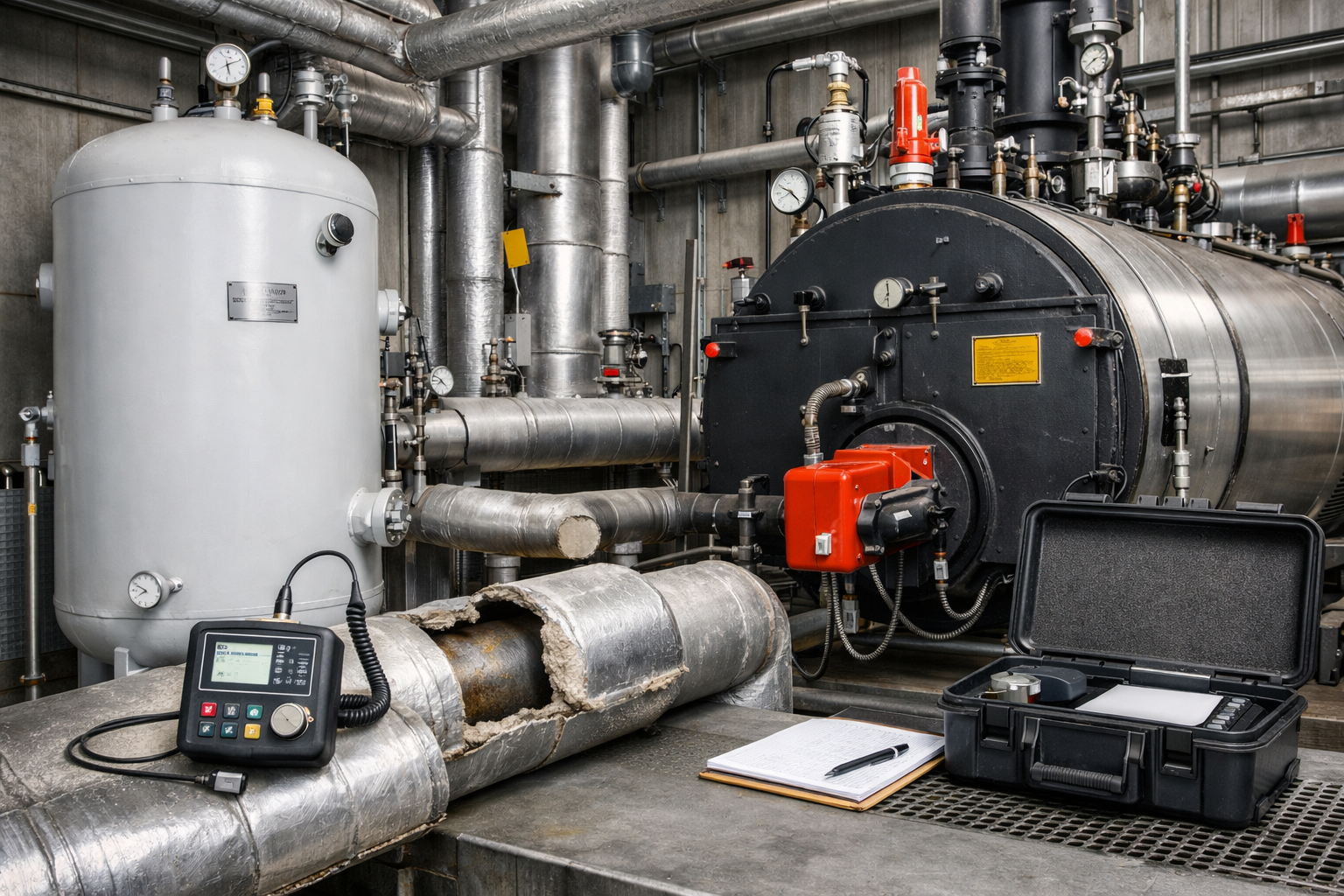
Boiler inspection under PECPR covers the pressure-containing components — shell, headers, tubes, end plates — plus the safety devices: pressure relief valves, water level controls, and automatic shutdown systems. A boiler inspection is not just a pressure test. It is a comprehensive assessment of condition, safety devices, and operating parameters.
Pressure Vessels
A pressure vessel holds a gas or liquid under pressure without generating it — air receivers, refrigeration vessels, heat exchangers, separators, accumulators. The inspection covers:
- External condition — corrosion, mechanical damage, support condition
- Internal condition — where access permits, or by UT thickness measurement where it does not
- Pressure relief valve condition and set point verification
- Nozzle and fitting condition
- Nameplate and design data verification against the current operating conditions
For heat exchangers, the tube bundle is a particular focus — tube wall thinning from flow-accelerated corrosion or erosion is a common failure mode and is detected by UT or eddy current testing.
Pressure Piping
Pressure piping under PECPR includes steam lines, compressed air, refrigeration, and process piping above the hazard threshold. The inspection covers:
- Pipe wall condition — UT thickness measurement at representative locations, particularly at bends, tees, and areas of known or suspected corrosion
- Support condition — pipe supports, hangers, expansion loops, and anchors
- Insulation condition where applicable — damaged insulation can hide corrosion under insulation (CUI), one of the most common and dangerous failure modes in process piping
- Valve and fitting condition
- Relief and safety device condition
CCA Tanks
CCA (chrome, copper, and arsenic) tanks are used in timber treatment plants. They are included in the PECPR scope because the combination of pressure and hazardous contents creates a specific regulatory obligation. Inspection covers pressure containment integrity and the condition of internal linings and corrosion protection systems.
What a Compliant Inspection Report Must Contain
A pressure equipment inspection report issued by a recognised inspection body under PECPR must include:
- The unique identifier (UN number) of the equipment
- The design standard the equipment was built to
- The safe working pressure (SWP) and temperature
- The date of inspection and the date of next inspection due
- A description of the inspection method used and the areas examined
- The findings — including any defects found, their location, and their significance
- The inspector's conclusion — fit for continued service, conditionally fit, or not fit for service
- The inspector's name, qualifications, and the inspection body's accreditation reference
A report that does not contain the UN number, the SWP, or the accreditation reference is not compliant. WorkSafe and insurers are entitled to — and do — reject reports that fail to meet these requirements.
DEG Survey & Inspection is a WorkSafe recognised inspection body and IANZ-accredited to ISO/IEC 17020 for pressure equipment inspection. We inspect across all PECPR equipment categories from our offices in Hamilton, Christchurch, Timaru, and Dunedin — with mobile teams for site work throughout New Zealand.
Get in touch: admin@deg.nz